
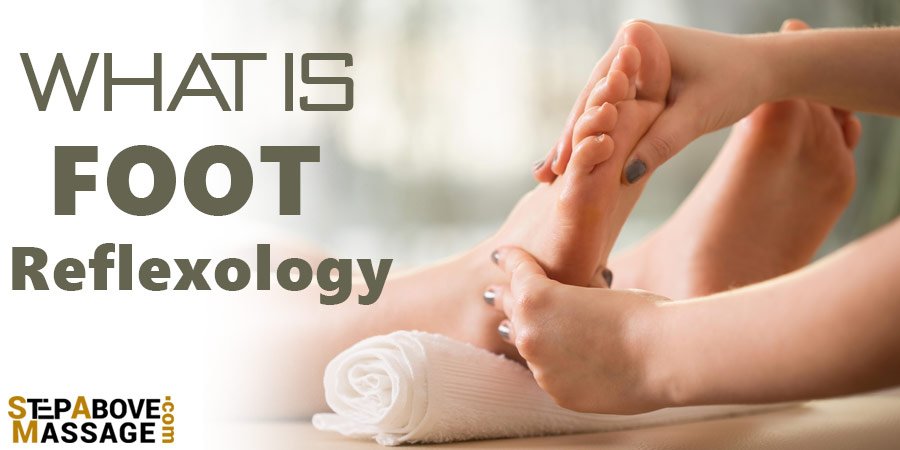
Foot reflexology is a complementary massage technique that uses pressure on specific areas of the feet based on a traditional reflexology map. It is commonly used to promote relaxation and support overall well-being, but it should not be considered a proven treatment for diseases or internal organs.
If you’re wondering whether foot reflexology is different from a regular foot massage, what happens during a session, or whether it may be right for you, the difference comes down to how the feet are treated.
A regular foot massage mainly focuses on relaxing the muscles and soft tissues of the feet. Reflexology, on the other hand, uses specific points and zones according to reflexology theory.
So, what can you realistically expect from a foot reflexology session? What are its potential benefits, and when should you avoid it?
What is reflexology massage
Foot reflexology is a complementary practice in which a trained practitioner applies pressure to specific points or areas of the feet.
Reflexology uses a traditional map that divides the feet into different zones, which practitioners believe correspond to different areas of the body. These connections are part of reflexology theory and are not the same as medically established anatomical connections.
Today, people commonly choose reflexology as a way to relax, reduce everyday tension, and enjoy a focused foot treatment.
Research into reflexology has explored potential effects on areas such as anxiety, sleep, pain, and general well-being. However, the evidence is mixed, and there is not enough scientific evidence to say that pressing a particular point on the foot can directly treat a specific internal organ or disease.
For that reason, reflexology is best viewed as a complementary wellness practice rather than a replacement for medical treatment.
What is the difference between foot massage and reflexology
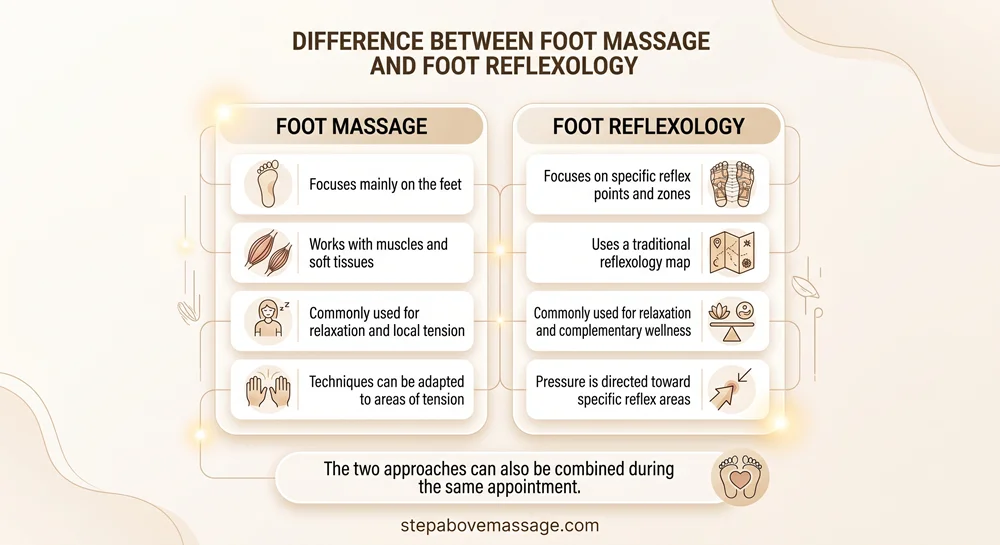
Although they can feel similar during a session, foot massage and reflexology are not exactly the same.
A foot massage generally focuses on the muscles, soft tissues, and areas of tension within the feet. A therapist may use techniques such as kneading, gliding, compression, and gentle stretching.
Foot reflexology follows a different approach. The practitioner works on specific points and zones based on a traditional reflexology map.
What Are the Benefits of Foot Reflexology?
People seek foot reflexology massage for different reasons. Research has examined reflexology in connection with relaxation, anxiety, pain, sleep, and quality of life, although findings are mixed and more research is needed.
Potential benefits may include:
Relaxation and Stress Relief
A quiet environment combined with focused pressure on the feet may help you slow down and relax. For many people, the opportunity to take a break from daily activities is an important part of the experience.
Comfort for Tired Feet
Standing, walking, exercising, or spending long hours on your feet can leave them feeling tired or tense. Focused foot massage and reflexology may provide temporary comfort and relaxation.
Support for Sleep
Some studies have explored reflexology and sleep quality. Although reflexology is not a treatment for sleep disorders, the relaxing experience may help some people unwind.
Temporary Relief From Discomfort
Reflexology and foot massage have been studied as complementary approaches for certain types of pain and discomfort. However, results vary, and reflexology should not be considered a proven treatment for an underlying medical condition.
General Well-Being
For some people, the main benefit is simply having dedicated time for relaxation and self-care.
Reflexology Zones
In this method, the body divided into 10 sections. Exact duplicate of these sections reflected on feet, hands, and ears. As you see on the pictures we have an exact duplicate of every part of the body on feet, ears, and hands.
We can work on reflexology points with pressing every point on feet, hands, and ears.
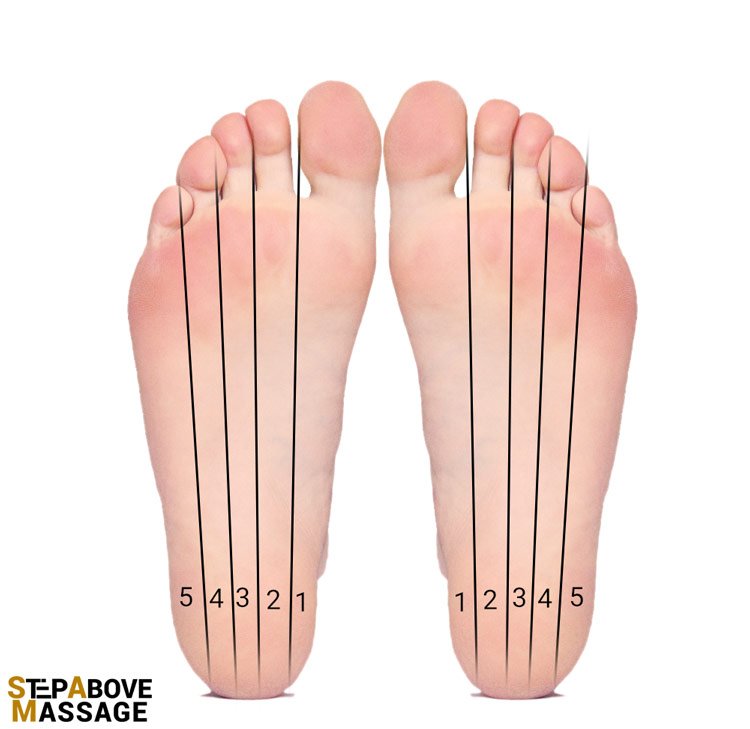
Reflexology lines
Reflexology lines are for horizontal lines that divided bottom of the feet and hands into 5 different sections.
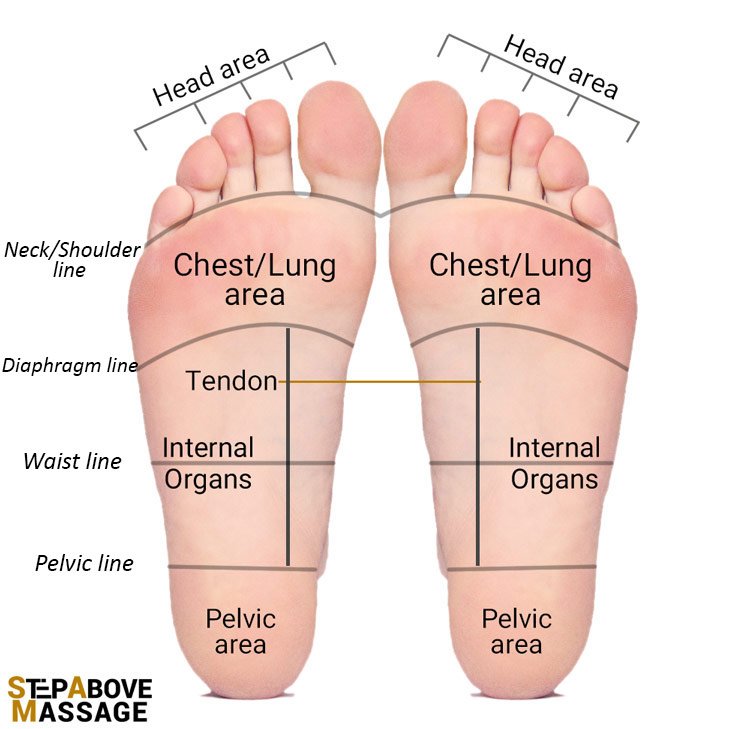
Neck and shoulder line
The first line is neck and shoulder line which is below the toes, which correspond to any area above the neck (brain, eyes, ears, sinuses, hypothalamus, head, pituitary gland, mastoid, and neck).
Diaphragm line
This line is located below the bowl of the feet. Any area located between the neck/shoulder line and Diaphragm line corresponds chest and lung area (shoulders, heart, long, Diaphragm, esophagus, trachea, thyroid, and parathyroid).
Pelvic line
This line is located at the top of the heels. Any area above this line is related to internal organs (small intestine, colon, duodenum, ureter, and bladder).
The area under this line is related to the pelvic area (pelvic and sciatica).
The inner side of the feet is related to a spine. Bottom of the feet is related to the sacrum. As we go up on the side of the feet, areas are related to the lumbar area, then thoracic area, and the cervical area which attached to big toe.
Waistline
This line is located in the middle of the Feet arch. Any area above this line corresponds to the abdominal cavity (stomach, pancreas, kidneys, adrenal gland, spleen, and solar plexus).
What Happens During a Foot Reflexology Session?
A typical foot reflexology session begins with a short conversation about your goals, comfort level, and any relevant concerns.
You will usually remove your shoes and socks and sit or lie in a comfortable position.
Your practitioner may then:
- Examine the feet for areas that may need to be avoided
- Use gentle massage to warm up the feet
- Apply pressure to selected reflexology points
- Work across the arches, heels, toes, and soles
- Adjust pressure according to your comfort
- Combine reflexology with general foot massage techniques
You may feel stronger pressure in some areas than others. If any technique feels painful or uncomfortable, tell your practitioner so the pressure can be adjusted.
How Long Does Foot Reflexology Take?
The length of a reflexology session depends on the type of appointment.
A focused foot reflexology session may take approximately 15 to 30 minutes, while reflexology can also be included as part of a longer massage session.
There is no scientifically established number of sessions required to treat a health condition. Some people choose reflexology occasionally for relaxation, while others include it regularly as part of their wellness routine.
Does foot reflexology massage have side effects
It is rarely reported side effects after a foot reflexology massage. You can put on the shoes and go with the best senses you can imagine! It’s not painful and it will be very relaxing. If you feel discomfort, tell your massage therapist. He or she will work within your comfort zone.
But if you ‘re suffering from the following problems, avoid this treatment:
- A foot sore
- Bruises
- Varicose veins
- Cuts
- Athlete’s foot
- Foot fractures
- Ingrown toenails
As you can see, foot reflexology massage has a lot of benefits to both physical and mental health. Try it 2 to 5 times a week in a spa center or learn it from other resources! If you have serious problems listed here, trust a professional foot reflexology.
How Often Should You Get Foot Reflexology?
There is no universal schedule for foot reflexology massage.
The appropriate frequency can depend on your personal goals, comfort, and health circumstances. Some people enjoy occasional sessions when they want to relax, while others choose regular appointments as part of their wellness routine.
More frequent sessions are not automatically more beneficial, and there is no established schedule for using reflexology to “heal” a medical condition.
Final Thoughts
Foot reflexology offers a different approach from a traditional foot massage. Rather than focusing only on relaxing the muscles, it uses pressure on specific areas of the feet based on traditional reflexology practices.
While some people find reflexology helpful for relaxation, stress, and general comfort, the claims about specific connections between the feet and internal organs have not been established as medical facts. Research on its health benefits is also still mixed.
For most people, reflexology can be considered a complementary wellness practice rather than a medical treatment. Understanding what it can—and cannot—do can help you decide whether it is something you would like to try.
Frequently Asked Questions About Foot Reflexology
Is Foot Reflexology Painful?
It should not be intentionally painful. You may notice areas that feel more sensitive than others, especially when firm pressure is applied. You can always ask the practitioner to adjust the pressure if it becomes uncomfortable.
Can Foot Reflexology Help With Stress?
Reflexology may be relaxing and can help some people feel less stressed. However, it should be considered a complementary wellness practice rather than a treatment for anxiety or other medical conditions.
How Often Should You Get Foot Reflexology?
There is no scientifically established schedule that applies to everyone. Frequency can depend on your goals, comfort level, and overall health. More frequent sessions do not necessarily mean better results.
When Should You Avoid Foot Reflexology?
It may be better to postpone reflexology or have the technique modified if you have open cuts or sores, a skin infection, significant bruising, a recent foot or ankle injury, severe swelling, or painful inflammation. If you have persistent foot pain, unexplained swelling, numbness, changes in sensation, or an injury that has not been evaluated, it is better to seek medical advice before having reflexology.
Is Foot Reflexology a Replacement for Medical Treatment?
No. Reflexology should not replace medical diagnosis or treatment. If you have a health condition or ongoing symptoms, talk with an appropriate healthcare professional rather than relying on reflexology alone.


One Response
My feet have been aching a lot, and I’m not sure what to do about it. It makes sense that I would want to get a good foot massage! That seems like a great way to relieve those muscles. I’ll be sure to find a professional to handle this for me.