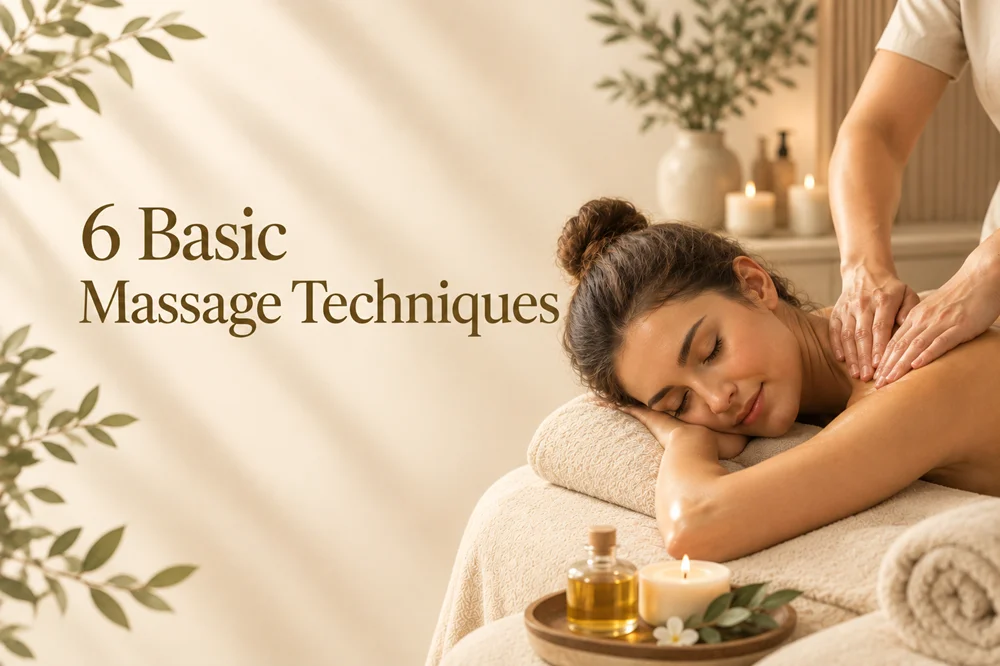
Massage therapists use different techniques to work with the muscles and soft tissues of the body. The type of movement, pressure, and rhythm can vary depending on the massage style and the client’s needs.
Understanding the basic massage techniques can help you know what to expect during a massage session. Many of these techniques are commonly used in Swedish massage, deep tissue massage, and other massage therapy approaches.
The six basic massage techniques discussed in this guide are effleurage, petrissage, friction, compression, tapotement, and vibration.
What Are the Basic Massage Techniques?
Basic massage techniques are different hand movements and methods used by massage therapists during a session. Some involve long, flowing strokes, while others use kneading, focused pressure, rhythmic tapping, or vibration.
A therapist may combine several techniques during one massage rather than using just one movement throughout the appointment. The pressure and pace can also be adjusted based on the area being treated and the client’s comfort.
1. Effleurage
Effleurage is a massage technique that uses long, smooth, gliding strokes over the body. The therapist can adjust the pressure and speed depending on the type of massage and the area being treated.
Effleurage is commonly used at the beginning and end of a massage. In Swedish massage, it is generally performed with lighter, flowing pressure.
The therapist may also use deeper effleurage when working with areas of muscle tension. The continuous movement allows the therapist to gradually introduce pressure while working across larger areas of the body.
2. Petrissage
Petrissage is a kneading massage technique that involves lifting, squeezing, compressing, and releasing soft tissue.
This technique is often used on larger muscle groups, including the shoulders, back, arms, and legs. The therapist can vary the pressure and rhythm depending on the area and the client’s comfort.
Petrissage is commonly associated with Swedish massage and can be combined with other massage techniques during the same session.
3. Friction
Friction is a more focused massage technique that uses pressure and short movements over a specific area.
Unlike effleurage, which uses longer gliding strokes, friction focuses on a smaller area of tissue. A massage therapist may use this technique when giving additional attention to an area of muscle tension.
The intensity of friction can vary considerably. Because it can feel more focused than other massage movements, communication between the client and therapist is important.
4. Compression Massage
Compression massage involves applying controlled pressure to soft tissue without necessarily using a gliding motion. The therapist may use the palms, fingers, or other parts of the hand and then gradually release the pressure.
The amount and duration of pressure can vary depending on the area being worked on, the technique being used, and the client’s comfort.
Sustained Compression
Sustained compression involves applying steady pressure to a specific area and holding it for a period of time before gradually releasing it. This is a more stationary form of compression massage.
Rhythmic Compression
Rhythmic compression uses repeated applications of pressure followed by release. The therapist controls the pace, depth, and duration of each movement throughout the technique.
Compression massage techniques can also be combined with other basic massage techniques during the same session.
5. Tapotement
Tapotement is a rhythmic percussion massage technique involving quick, repeated movements on the body.
Different forms of tapotement can include light tapping or other controlled percussion movements. The therapist determines the intensity and rhythm based on the massage style and the area being treated.
Tapotement is generally used as one part of a massage session rather than continuously throughout the entire appointment.
6. Vibration
Vibration involves rapid shaking, trembling, or oscillating movements applied to the body or a specific area.
The therapist can control the speed and intensity of the movement depending on the technique and the area being treated.
Vibration may be incorporated into a massage session alongside other techniques rather than being used as the primary movement.
How Massage Techniques Are Used
Massage therapists often combine different techniques rather than using only one movement throughout a session. The techniques selected can vary depending on the massage style, the area being worked on, the desired pressure, and the client’s preferences.
In Swedish massage, techniques such as effleurage, petrissage, friction, and tapotement are commonly combined to create a flowing and rhythmic massage experience. The pressure can be adjusted throughout the session based on the client’s comfort and preferences.
In Deep Tissue massage, the therapist may use slower strokes, focused pressure, compression, and friction to work more specifically on areas of tension. The techniques and pressure can be adjusted depending on the area being addressed and the client’s comfort level.
The same basic massage technique can feel different depending on the massage style, pressure, speed, and duration used by the therapist.
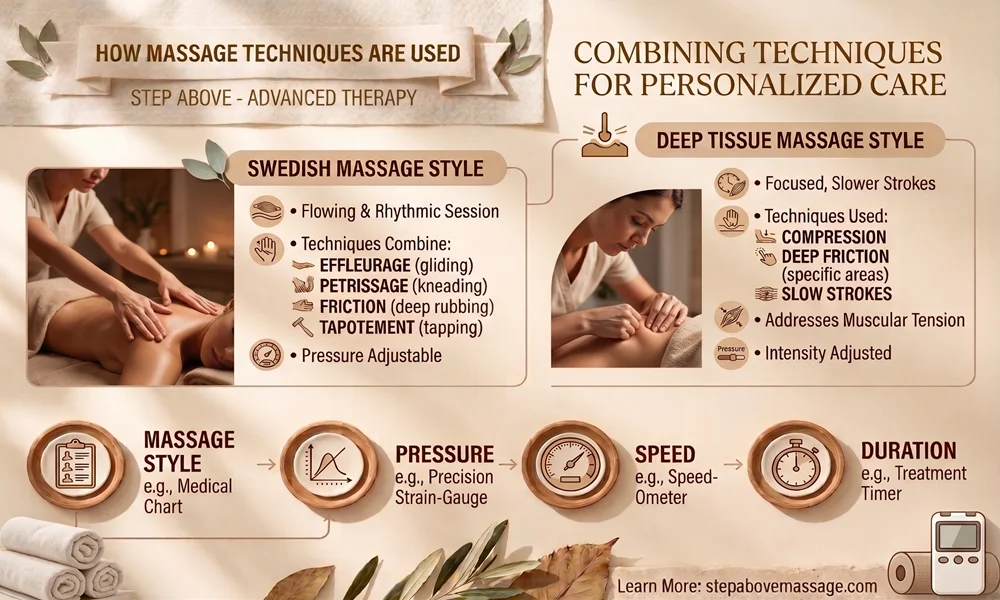
How Massage Therapists Combine Different Techniques
A massage session usually involves more than one massage technique. Therapists may combine different movements to create a session that fits the massage style and the client’s preferences.
For example, a therapist may begin with effleurage before using petrissage on larger muscle groups. More focused techniques, such as friction or compression, may then be used on specific areas.
The combination of techniques depends on the type of massage, the areas being addressed, the desired pressure, and the client’s comfort.
Conclusion
Understanding the basic massage techniques can make it easier to recognize the different movements used during a massage. Effleurage, petrissage, friction, compression, tapotement, and vibration each have their own purpose and movement pattern. A therapist may combine several techniques and adjust the pressure throughout a session to create a comfortable experience based on the client’s needs.
At Step Above Massage, your preferences and comfort can be discussed with your therapist before and during your session.
Frequently Asked Questions About Massage Techniques
What are the basic massage techniques?
The six commonly discussed basic massage techniques are effleurage, petrissage, friction, compression, tapotement, and vibration. Massage therapists may combine these movements depending on the type of massage and the client's preferences.
What is compression massage?
Compression massage involves applying controlled pressure to soft tissue and then releasing it. It may be performed as sustained pressure or as repeated rhythmic compressions.
What is the difference between compression and effleurage?
Compression applies pressure to a specific area without necessarily gliding across the tissue. Effleurage uses smooth, continuous strokes that move across the body.
Which massage technique uses kneading movements?
Petrissage is the massage technique most commonly associated with kneading, lifting, rolling, and gently squeezing soft tissue.
What technique uses long, gliding strokes?
Effleurage uses smooth, gliding strokes and is commonly used to transition between different massage techniques.
Are all massage techniques used in every session?
No. A massage therapist may select and combine techniques based on the massage style, the area being worked on, the preferred pressure, and the client's comfort.