

Massage is generally considered a low-risk therapy, but it can sometimes cause temporary soreness or other unwanted effects. In rare cases, more serious complications may occur, particularly when massage is performed with excessive pressure, inappropriate techniques, or without considering a person’s health history.
Understanding the potential risks, communicating with your massage therapist, and knowing when massage may not be appropriate can help make your experience safer.
How Can Massage Therapy Cause Problems?
Massage may cause discomfort or injury in certain situations. Potential risk factors include:
- Excessive pressure or overly forceful techniques
- Using a massage technique that is not appropriate for the client
- Failing to consider existing injuries or health conditions
- Poor communication between the client and massage therapist
- Receiving massage over an injured, inflamed, infected, or healing area
- Inadequate hygiene or improperly maintained equipment
Do Massage Risks Depend on the Type of Massage?
The level of pressure and technique used during a massage can affect the risk of discomfort or injury. Deep tissue, trigger point, sports, and other firm-pressure techniques may cause more soreness when too much pressure is used or when the technique is not appropriate for the client.
Serious complications are uncommon, but people with certain health conditions or recent injuries may have a higher risk. Choosing an appropriate massage technique and communicating with your therapist about your health and comfort level are important steps for reducing unnecessary risk.
| Massage Type | Pressure Level | Possible Soreness | Important Consideration |
|---|---|---|---|
| Swedish Massage | Light to Moderate | Usually Mild | Generally focused on relaxation and gentle pressure |
| Deep Tissue Massage | Moderate to Firm | More Likely | Pressure should be adjusted to the individual’s condition |
| Sports Massage | Moderate to Firm | May Be More Noticeable | Technique should be adapted to the person’s physical condition |
| Trigger Point Massage | Focused | May Occur | Pressure should be carefully controlled around sensitive areas |
| Shiatsu Massage | Moderate | Varies | Pressure and techniques should be appropriate for the individual |
How Can You Reduce the Risk of Massage Injuries?
You can take several steps to make your massage experience safer:
- Choose a properly trained and qualified massage therapist.
- Tell your therapist about relevant medical conditions, injuries, recent procedures, and medications.
- Explain areas of pain, tenderness, or sensitivity before the massage begins.
- Communicate clearly about the amount of pressure you are comfortable with.
- Ask your therapist to reduce the pressure or change techniques if something feels uncomfortable.
- Avoid massage directly over open wounds, active skin infections, or recent injuries.
- Seek medical evaluation when you have a health problem that should not be treated with massage alone.
If you are unsure whether massage is appropriate for you, speak with your healthcare provider before your appointment.
Who Should Be Careful About Getting a Massage?
Some health conditions and circumstances may require additional precautions or changes to a massage session.
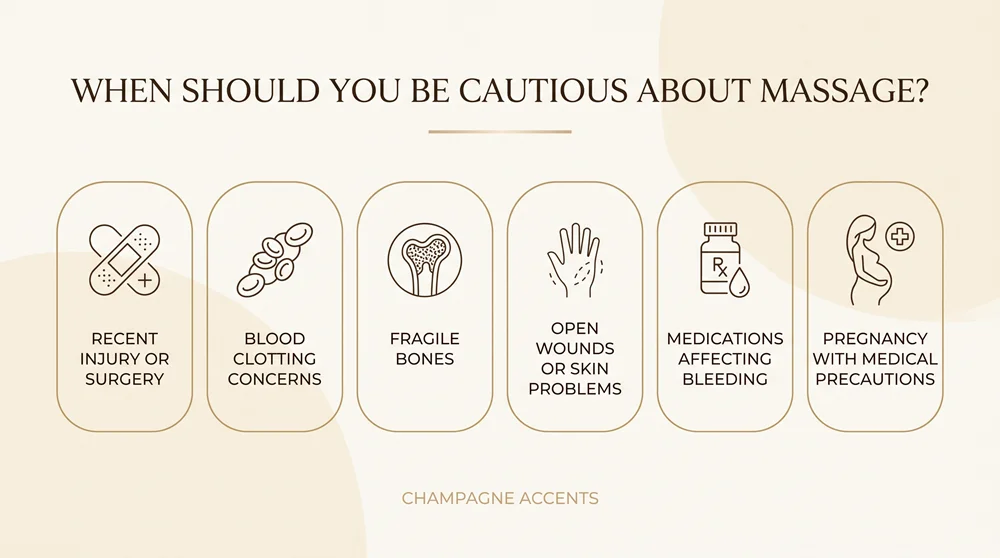
Talk with your healthcare provider and inform your massage therapist if you have:
- A blood clot or deep vein thrombosis (DVT)
- A bleeding disorder or take blood-thinning medication
- Osteoporosis or another condition that increases fracture risk
- A recent surgery or acute injury
- Open wounds, burns, or fragile skin
- Certain cancer-related conditions
- A pregnancy that requires additional medical precautions
This does not necessarily mean that massage is inappropriate in every case. The appropriate approach depends on the person’s health, the type of massage, and the techniques being used.
What Should You Consider Before a Massage?
Before receiving a massage, consider your current health and any conditions or injuries that could affect the session.
Tell your massage therapist about:
- Previous or recent injuries
- Recent surgery or medical procedures
- Medications that may affect bleeding or bruising
- Areas of pain or sensitivity
- Skin irritation, wounds, or inflammation
- The type and pressure level of massage you prefer
Massage can complement relaxation and wellness, but it should not replace medical evaluation or treatment when you have a condition that requires professional care.
Can Massage Cause Muscle Soreness?
Some people experience temporary muscle soreness or tenderness after a massage, especially after deeper-pressure techniques. This does not necessarily mean that an injury has occurred.
However, severe pain, significant swelling, unusual or extensive bruising, weakness, numbness, or symptoms that continue or worsen should not be ignored. If you are concerned about your symptoms, contact a healthcare professional.
When Should You Stop a Massage?
Massage should not cause sharp, severe, or unexpected pain.
Tell your massage therapist to stop or adjust the technique if you experience:
- Sharp or severe pain
- Sudden numbness or tingling
- Significant discomfort
- Dizziness or feeling faint
- Pain that becomes worse during the session
Good communication allows your therapist to adjust the pressure, technique, or treatment area according to your needs.
Can Deep Tissue Massage Cause Injury?
Deep tissue massage uses firmer pressure to work on deeper layers of muscle and soft tissue. Some soreness or tenderness may occur afterward.
However, deeper pressure is not appropriate for everyone. People with certain medical conditions, recent injuries, fragile bones, bleeding concerns, or other risk factors may need modifications or may need to avoid certain techniques.
If you are unsure whether deep tissue massage is suitable for you, discuss your situation with your healthcare provider and massage therapist.
Final Thoughts
Massage therapy is generally considered low risk when performed appropriately, but no massage technique is completely risk-free. Excessive pressure, inappropriate techniques, existing health conditions, and poor communication can increase the risk of unwanted effects.
Choosing a qualified massage therapist, sharing relevant health information, and communicating about pressure and discomfort throughout the session can help create a safer massage experience.
Frequently Asked Questions
Can a massage cause an injury?
Massage can occasionally cause soreness or discomfort, while serious injuries are rare. The risk may increase with excessive pressure, inappropriate techniques, or certain health conditions.
Is it normal to be sore after a massage?
Mild and temporary soreness or tenderness can occur, particularly after deeper-pressure massage. Severe, persistent, or worsening pain should be evaluated by a healthcare professional.
Can deep tissue massage cause injury?
Deep tissue massage may cause temporary soreness and, in rare cases, more serious complications. It may not be appropriate for everyone, particularly people with certain medical conditions or injuries.
Who should avoid or modify massage?
People with certain conditions, recent injuries or surgery, blood-clotting concerns, fragile bones, or open wounds may need to avoid certain techniques or modify their massage. A healthcare provider can help determine what is appropriate.
Should massage hurt to be effective?
No. Massage does not need to be painful to be effective. If the pressure causes sharp or significant pain, tell your therapist so the technique can be adjusted.
When should I seek medical help after a massage?
Seek medical advice if you experience severe or persistent pain, significant swelling, unusual bruising, weakness, numbness, or other concerning symptoms after a massage.